

High-Performance, Self-Hosted
API Gateway & API Management
Full API Management, not just routing: docs, security & traffic control.
Runs anywhere: Kubernetes, Docker, bare metal or any cloud.
Stateless by design: scales linearly, no coordination overhead.
No per-request pricing: open source core, flat enterprise licensing.
No vendor lock-in: declarative config, GitOps native.




Get a Personalized Demo
Tell us about your API Gateway needs and get a personalized demo. Or write us at [email protected]

I've chosen KrakenD because of its simplicity, statelessness, immutability, and performance.
”Tech Lead Cloud Infrastructure, IBM







More Than a Gateway: Full API Management
Most API gateways only route traffic. An API Management Platform needs to do more: document your APIs, enforce policies, track usage, and give teams self-service access without waiting on a platform team. KrakenD covers the full lifecycle from a single declarative configuration file: authentication and authorization, request and response transformation, rate limiting, circuit breakers, and detailed traffic analytics, all versioned in Git like the rest of your infrastructure. There's no separate control plane to run, patch, or scale, and no proprietary UI standing between your team and the configuration that actually runs in production. When evaluating API Management tools or comparing the best API Management platforms on the market, the questions that matter are how fast changes ship, how much infrastructure they add, and how well they integrate with your existing CI/CD. KrakenD answers all three: changes deploy through the same pipelines you already use, and the entire platform runs as a single stateless binary.
Built for Kubernetes and Microservices
Running a Kubernetes API Gateway shouldn't mean adopting a new control plane or a sidecar on every pod. KrakenD deploys as a single container or binary alongside your services, managed through standard Kubernetes manifests. As an API Gateway for microservices, it aggregates multiple backend calls into one response with the Backend for Frontend pattern. The Enterprise Edition extends this further, adding protocol transformation between REST, gRPC, GraphQL, and SOAP without touching backend code, and applying consistent auth and rate limiting across every service behind it. Because it's stateless, adding a K8s API Gateway replica is just another pod: no database to replicate, no cluster state to synchronize, no leader election. Cloud native teams get the portability they need, since the same configuration runs unchanged on EKS, GKE, AKS, OpenShift, or bare metal, so migrating between clusters or clouds never means rewriting your gateway layer.
Stateless by Design: Scales to Any Traffic
Most API gateways slow down under load because they depend on a shared database, cache, or control plane that becomes the bottleneck. KrakenD is a stateless API Gateway: every instance holds no shared state, so a high performance API gateway deployment scales the same way your services do, by adding replicas behind a load balancer, with no coordination overhead and no single point of failure. Built in Go and compiled to a single binary, it processes requests with minimal memory allocation and sub-millisecond overhead per hop, which is why teams choose it for high traffic workloads: payment processors, e-commerce flash sales, and telecom APIs handling millions of requests per day. There's no vertical ceiling either. Because scaling is purely horizontal, a scalable API gateway built on KrakenD grows by adding commodity nodes instead of provisioning bigger ones, and because there's no database to shard or replicate, that scaling happens without downtime or migration windows.
Open Source Core, No Per-Request Pricing
KrakenD started as an open source API Gateway in 2016, and the core engine is still free to use, self-host, and modify under an Apache 2.0 license. The Community Edition covers routing, auth, rate limiting, and protocol transformation with no license required. That matters because most competing platforms charge per API call, per gateway instance, or per environment, so your bill grows with your traffic instead of your value. Enterprise Edition adds plugin support, gRPC and SOAP connectivity, advanced security, governance, SLA-backed support, and much more in cost and time-saving features, all under flat licensing with no metered fees. When you calculate the real cost of an API Gateway, factor in the infrastructure it needs to run its own control plane and database. Because KrakenD has neither, teams typically run fewer nodes for the same traffic, which is the difference between a gateway that scales your costs and one that scales your business.
Auth, Rate Limiting and API Security at the Edge
An API Security Gateway needs to stop bad traffic before it reaches your backends, not after. KrakenD enforces authentication and authorization at the edge with OAuth2, OIDC, JWT validation, mTLS, and API keys, so backend services never have to implement auth logic themselves. As a rate limiting gateway, it applies limits per endpoint, per client, or per token, with circuit breakers that isolate failing backends automatically instead of letting one slow dependency cascade into an outage. On top of that, request and response validation against JSON Schema blocks malformed payloads before they hit application code, and every policy is defined declaratively and versioned in Git, so security reviews happen on pull requests instead of tickets. Because KrakenD API Gateway security runs entirely inside your own infrastructure, sensitive headers, tokens, and payloads never leave your perimeter to reach a third-party control plane, which matters for teams working under PCI DSS, HIPAA, or GDPR.
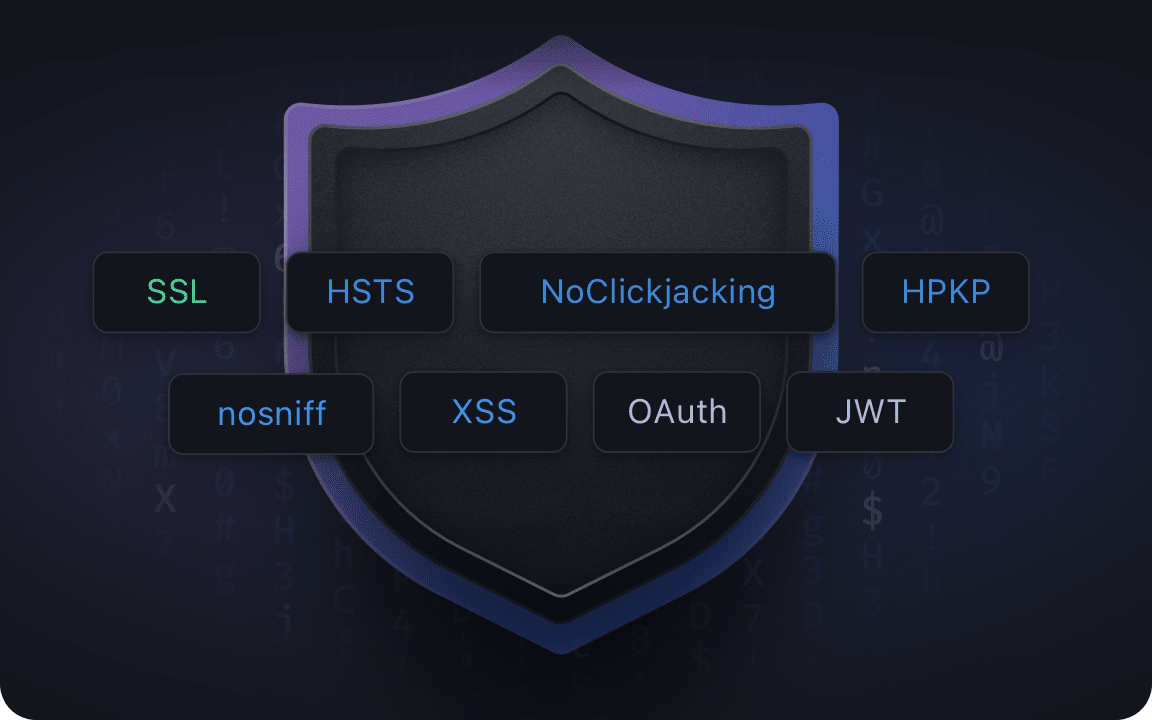
API Gateway & API Management FAQ
Frequently Asked Questions
1. What is an API Gateway?
An API Gateway sits between clients and your backend services, handling routing, authentication, rate limiting, and protocol transformation in one layer. KrakenD goes further: instead of just proxying requests, it composes them, merging multiple backend calls into a single response so clients get exactly what they need without extra round trips.
2. What's the difference between an API Gateway and an API Management platform?
An API Gateway handles live traffic: routing, auth, and rate limiting at runtime. API Management adds developer portals, analytics, and lifecycle governance on top. KrakenD covers both layers in a single declarative configuration, without running a separate control plane or database.
3. Do I still need an API Gateway if I already use my cloud provider's one (AWS, Azure)?
Cloud-native gateways work well inside a single cloud but add per-request fees, lock you into one provider, and behave differently across regions. KrakenD runs identically on any cloud, on-prem, or hybrid, with flat licensing and no per-call charges, so your cost doesn't scale with traffic.
4. Is KrakenD an open source API Gateway?
Yes. KrakenD's core engine has been open source since 2016 under Apache 2.0. The Community Edition covers routing, auth, rate limiting, and protocol transformation with no license required. The Enterprise Edition adds plugin support, advanced security, governance, SLA-backed support, and much more in cost and time-saving features. For teams that need custom extensions or production guarantees, that's the version to evaluate.
5. How is KrakenD priced, and what does an enterprise API Gateway really cost?
KrakenD Enterprise uses flat licensing, not per-request pricing, so cost doesn't grow with traffic volume. Because it's fully stateless and requires no database or control plane, infrastructure overhead stays low. Most teams end up paying significantly less than platforms that charge per call or require dedicated management infrastructure.
6. Can KrakenD run on Kubernetes, Docker, or bare metal?
Yes. KrakenD ships as a single binary and a Docker image, and runs on Kubernetes via standard deployment manifests. The same configuration runs unchanged across Kubernetes, bare metal, or any cloud provider, with no environment-specific adjustments needed. There is also a community-maintained Helm chart, though it is not an official KrakenD release.
7. Does KrakenD support gRPC, GraphQL, and REST aggregation (BFF)?
Yes, and this is where KrakenD goes beyond a standard reverse proxy. It transforms and aggregates REST, gRPC, GraphQL, and SOAP backends into a single composed response, implementing the Backend for Frontend pattern declaratively. Frontend teams get the exact payload shape they need without backend services changing or coordinating releases.
8. How does KrakenD handle authentication, rate limiting, and API security?
KrakenD enforces OAuth2, OIDC, JWT validation, mTLS, and API keys at the edge, before requests reach your backends. Rate limiting and circuit breakers apply per endpoint, client, or token. Request and response validation against JSON Schema blocks malformed traffic automatically, at the gateway layer.
9. What throughput can KrakenD sustain, and why does stateless matter?
KrakenD is built in Go and compiled to a single binary with no shared state. Throughput scales linearly by adding replicas, not by resizing a database. Public benchmarks show tens of thousands of requests per second per node with sub-millisecond added latency. Stateless also means simpler deployments, faster restarts, and no distributed state to manage.
10. How does KrakenD compare to Kong?
Kong has a strong plugin ecosystem and a managed cloud option (Konnect), typically backed by a database or control plane for configuration. KrakenD is fully stateless and declarative, with no database to run or scale, flat self-hosted pricing instead of per-call fees, and native API composition that Kong doesn't offer out of the box.
11. How does KrakenD compare to Google Apigee?
Google Apigee is a mature, cloud-based API Management suite from Google, well-suited for large enterprises already committed to GCP. KrakenD is infrastructure-agnostic and self-hosted, running on any cloud or on-prem with no per-call pricing. Teams that don't need a managed SaaS platform get more performance and less operational complexity at a lower total cost.
12. What about WSO2, Axway, or IBM API Connect?
WSO2, Axway, and IBM API Connect are established API Management suites with broad feature sets, but they typically require dedicated infrastructure and specialized teams to operate and maintain. KrakenD delivers the gateway and management capabilities most teams actually use, as a single stateless binary, with a smaller operational footprint and no per-call costs.

Ready to take control of your API traffic?
Get a personalized demo. No new infra. No vendor lock-ins.
Book a Demo This Week Book a Demo This Week