
News KrakenD CE 2.13.10 and EE 2.13.8 update released

Migrate From Tyk to KrakenD:

Migrate From Tyk to KrakenD:

Tyk Is a Gateway Plus Overhead. KrakenD Is Just the Gateway.

No database in the critical path. No control plane to manage. No plugins required for standard gateway functions. Just declarative config and up to 80,000 RPS per instance.

The gateway is not the bottleneck. The operational surface around it is.

Start the Migration Conversation

The Hidden Tyk Bill

The Three Costs That Don't Appear on Your Tyk Invoice

The first part is the infrastructure overhead. The second is the plugin maintenance cycle. The third is the pricing opacity. Most teams discover part two on their first major upgrade. They discover part three when they try to renew.

Every Tyk Deployment Comes With Dependencies

Tyk requires Redis for node coordination and rate limiting. Configuration lives in a database managed through a dashboard. Upgrading Tyk means managing the compatibility of each component: gateway, dashboard, pump, Redis, and any custom plugins in use. For teams that want to deploy a gateway the same way they deploy any other stateless workload, that surface area is a constant operational overhead.

KrakenD is a single Docker image and a config file. No Redis for basic operation. No database in the critical path. No dashboard to maintain. Configuration lives in Git and deploys through your existing CI/CD pipeline.

Tyk Needs Plugins for What KrakenD Does in Config

Tyk uses Go for its plugin system, which is a genuine improvement over Lua. But the deeper issue is not the language. It is what those plugins are covering: payload transformation, SOAP, response filtering, and protocol-level manipulation that most teams end up building as Tyk plugins because they are not available natively in the configuration layer.

KrakenD handles all of those natively in declarative config. No plugin to write, no binary to compile, no version dependency to track. When KrakenD ships a new version, your config works unchanged. The plugin system exists for genuinely custom logic, not for standard gateway functions that should have been in the box from the start.

Enterprise Pricing Is Not Flat

Tyk publishes no dollar pricing at any tier. Core, Professional, and Enterprise all route through a contact-sales flow. What you pay scales with traffic volume, API count, or deployment scope depending on the contract. Every new team, every new product line, every integration milestone is a potential renegotiation. You find out what it costs at renewal, when switching is hardest.

KrakenD is priced by flat-tiered plans. A traffic spike that doubles your call volume does not change your invoice. Scale your traffic as fast as your business demands. The gateway bill stays the same.

The Migration Payoff

What Changes With KrakenD

Config, not a dashboard. Stateless by design. Try before you commit. One price, no feature tier creep. Your Tyk config is not wasted. And you will not need a consultant.

Config, Not a Dashboard

KrakenD has no management dashboard, no database-backed control plane, no UI for configuration. Your gateway is a declarative JSON file in Git. Changes go through your existing CI/CD pipeline. Every change is versioned, auditable, and reversible. Rollback is a Docker tag.

Config, Not a Dashboard

Stateless by Design

No database in the critical path. No coordination between nodes for standard operation. Each instance runs independently. Horizontal scaling is linear: add an instance, add capacity. No Redis for basic operation, no control plane synchronization.

Stateless by Design

Try Before You Commit

KrakenD's Community Edition is the same runtime as Enterprise. Teams deploy it against real infrastructure, validate the approach, and start a license conversation only after the technical case is closed. No sales-gated trial.

Try Before You Commit

One Price, No Feature Tier Creep

KrakenD Enterprise is priced by flat-tiered plans. Every feature, including RBAC, OIDC, rate limiting, SOAP, gRPC, WebSockets, and observability, is included at every tier. Features do not move between tiers between versions.

One Price, No Feature Tier Creep

Your Tyk Config Is Not Wasted

KrakenD's declarative model maps cleanly from Tyk's API definitions and policies. KrakenD's engineering team has converted Tyk configurations directly for teams in evaluation. Start with a subset of low-complexity routes, validate in parallel, and expand incrementally.

Your Tyk Config Is Not Wasted

You Will Not Need a Consultant

G2 Fall 2026 API Management, Mid-Market: 100% of KrakenD implementations are done in-house with no vendor services and no external consultants. Average time to go-live: 2 months. KrakenD's Results Score in Mid-Market is 82% vs Tyk's 70% in the same segment.

You Will Not Need a Consultant

Drop-In Compatibility

What Doesn't Change With KrakenD

You are not migrating your infrastructure. You are replacing one control plane with a config file. Everything around it stays.

Deploys Like Any Stateless Workload

KrakenD runs as a standard Docker image via Kubernetes manifests. No operator, no CRDs, no new abstractions. Dev and staging instances are unlimited across all plans, so you can run Tyk and KrakenD in parallel across as many non-production environments as your migration requires, at no additional cost. Validate route by route before a single production request moves.

Your Observability and Auth Stack Stay Untouched

Native OpenTelemetry. Prometheus, Grafana, Datadog, New Relic, your SIEM. JWT, OIDC, mTLS, API Keys, OAuth2: all native, no plugin required. If your current Tyk setup validates tokens, KrakenD handles the same flows in declarative config.

No Protocol Left Behind

REST, gRPC, GraphQL, WebSockets, SOAP, Kafka, AMQP. Each instance handles 40,000 to 80,000 RPS with stateless horizontal scaling. No Redis required for standard operation. Each instance runs independently with stateless rate limiting.

The Cost Curve

What Happens to Your Gateway Cost When Traffic Grows

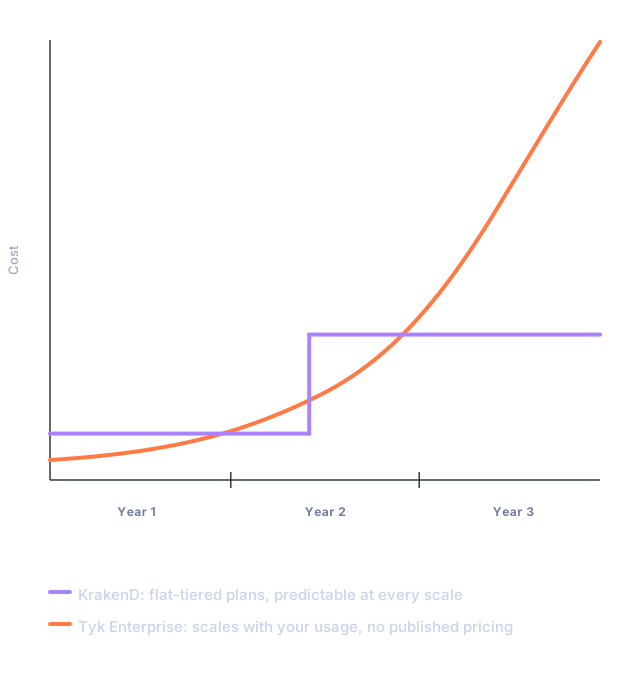
Tyk Enterprise pricing scales with traffic volume, API count, or deployment scope depending on the contract you signed. No dollar pricing is published at any tier: Core, Professional, and Enterprise all route through a contact-sales flow. As your business grows, at least one of those variables grows with it. Every new team, every new product line, every new integration is a potential renegotiation. You find out what it costs at renewal, when switching is hardest.

KrakenD is priced by flat-tiered plans. A traffic spike that doubles your call volume does not change your invoice. A record-breaking day costs the same as a quiet Tuesday. Your gateway cost is a line in the annual budget, not a variable you discover at the end of a sales call.

Chart: KrakenD's flat-tiered cost versus Tyk Enterprise's rising, unpublished traffic-based cost over three years
KrakenD: One gateway for APIs & AI Workloads
image G2 High Performer, Fall 2026
image G2 Momentum Leader, Fall 2026
image G2 Easiest Admin, Mid-Market, Fall 2026
image G2 Fastest Implementation, Small-Business, Fall 2026
image G2 Users Love Us, Fall 2026

Independent Data: G2 Fall 2026 API Management

Independent Data: G2 Fall 2026 API Management

Metric

KrakenD

Tyk

NPS, Overall

8170

NPS, EMEA

8274

Results Score, Mid-Market

82%70%

Momentum Score

5830

ROI payback, Mid-Market

3 months17 months

G2 quadrant, Overall

High PerformerHigh Performer

Source: G2 Fall 2026 API Management reports. Data collected through July 28, 2026, published August 25, 2026. All figures are third-party verified peer reviews, not vendor claims.

They Evaluated Tyk. They Chose KrakenD.

Other gateways make complexity the default, you end up needing UIs just to manage their bloat. KrakenD is the opposite: well-documented, simple, powerful. It just works.

Elliot Jalgard Lead Software Engineer, Neo4j
Read the Case Study »

I don't need to think about KrakenD, it just works.

Dave McPherson Platform Engineering Lead, Culture Amp
Read the Case Study »

What About AI?

Tyk's AI Gateway Is an Enterprise Add-On. KrakenD's Is Native.

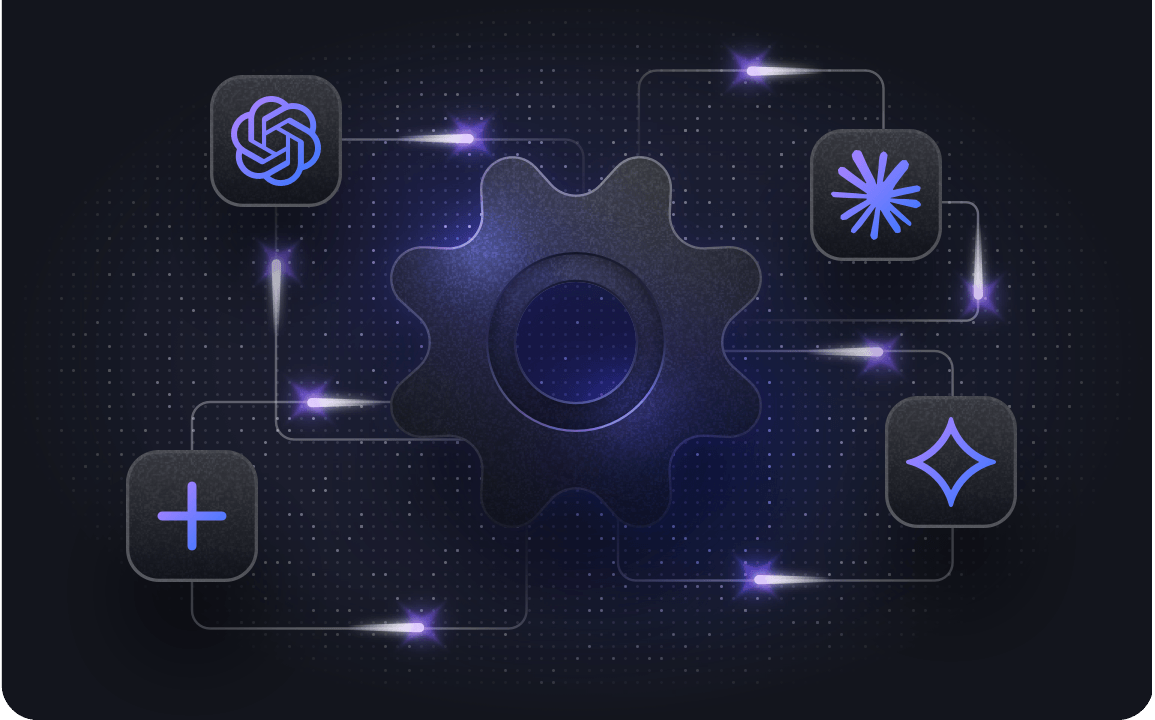
Tyk has added AI Gateway capabilities as part of its enterprise offering. KrakenD's AI Gateway is native config built into the same binary as the API gateway: LLM routing, prompt guarding, semantic caching, token budgets, and an MCP server with no additional service to deploy.

The same pattern applies as the rest of the platform: with Tyk, AI is an enterprise add-on layered on top. With KrakenD, it is config.

See How KrakenD Governs LLM Traffic

KrakenD AI Gateway

Tyk Migration FAQ

Frequently Asked Questions

1. Is the migration a big-bang cutover or can we do it incrementally?

Incremental. Start with a subset of low-risk routes. Run KrakenD alongside Tyk in parallel (dev and staging instances are unlimited, no licensing cost for the parallel period). Validate behavior route by route. No production traffic moves until your team is confident. KrakenD's engineering team has converted Tyk configurations directly for teams in evaluation; bring your config to the migration assessment call.

2. We have Go plugins built for Tyk. What happens to them?

Most of that logic maps to native declarative config in KrakenD: rate limiting, JWT validation, payload transformation, response filtering, and similar capabilities that needed a plugin in Tyk are built in. What is left over, genuinely custom logic, still runs as a Go plugin. The migration assessment call will go through your plugin inventory and tell you which category each one falls into before you commit.

3. We use Tyk's dashboard for configuration. How does KrakenD handle that?

KrakenD has no dashboard. Configuration is a declarative JSON file in Git, deployed through your CI/CD pipeline. Changes are versioned, auditable, and reversible by default. Teams coming from Tyk's dashboard model adapt quickly once they see how GitOps workflows handle day-to-day operations, but it is a genuine workflow change worth planning for before you start.

4. We run Tyk on Kubernetes using the Tyk Operator. What replaces it?

KrakenD deploys as a standard Docker image via Kubernetes manifests. No operator, no CRDs, no new abstractions. The config file is baked into the image at build time and deployed through your existing pipeline. The function the Tyk Operator served, managing API definitions in Kubernetes, is replaced by your standard CI/CD process with KrakenD.

5. How long does a migration take?

G2 Fall 2026 Mid-Market: KrakenD's average time to go-live is 2 months, with 100% of implementations done in-house. The actual timeline depends on the number of routes and the complexity of your Tyk plugins. A phased migration of a subset of routes can go live in days.

6. Tyk offers an open source version. So does KrakenD. What is actually different?

KrakenD's Community Edition is the same runtime as Enterprise. The core engine does not change between tiers. With Tyk, the OSS and Enterprise products diverge with each release. In October 2024, Tyk converted the Tyk Operator from open source to closed source, requiring a paid license to operate. What is free today is not guaranteed to remain free in the next major version.

7. We are evaluating Tyk's AI Gateway capabilities. Should that change our timing?

Tyk's AI Gateway is an enterprise add-on layered on top of its existing architecture. KrakenD's AI Gateway is native config: LLM routing, prompt guarding, semantic caching, token budgets, MCP server, all in the same binary as the API gateway. If you are building AI agent infrastructure, the architecture you choose for the gateway determines the architecture of the AI layer above it.

Start the
Migration Conversation

Walk through your current Tyk setup, the routes and plugins involved, and what a phased, low-risk migration path looks like for your architecture.

Start the Migration Conversation    See the Full KrakenD vs Tyk Comparison

Stay up to date with KrakenD releases and important updates